
Download the full report here: CLICK HERE
Introduction
In recent months, The Government of The Gambia has reported an increase in the cost of bread, with the price of a standard loaf rising from D10 to D12 in many communities. This development has heightened financial pressure on households, especially among low-income families already struggling with constrained budgets. Public discussions have attributed the increase to multiple factors, including rising flour and wheat importation costs, adjustments in government tax policies, and broader inflationary pressures affecting essential goods.
Given bread’s central role in Gambian diets and the sensitivity of its cost to household welfare, A2Zurvey conducted a rapid survey to better understand the implications of this price change. The survey was administered in two key administrative areas—the West Coast Region and the Greater Banjul Area—with the aim of capturing bread purchasing habits, levels of public awareness regarding the price hike, perceptions of the main drivers behind the increase, and the broader socioeconomic impact on households.
The purpose of this study is to provide evidence-based insights into the recent rise in bread prices and its implications for Gambian consumers. Specifically, the study seeks to: (i) examine purchasing patterns and consumption behavior, (ii) assess public awareness and opinions on the causes of the price increase, and (iii) evaluate the socioeconomic effects of the rising cost of bread on households. By doing so, the findings aim to inform policymakers, stakeholders, and the general public on the potential consequences of bread price fluctuations and possible measures to mitigate their impact.
At a Glance
- Awareness: An overwhelming majority of respondents (98.6%) were aware of the price increase.
- Perception of Justification: 74.5% of respondents believe the price increase is not justified.
- Impact: 32.08% of participants anticipate the price hike will have a major impact on their household budgets.
- Consumption Change: While 54.72% continue to buy the same amount, a significant portion (37.26%) now buy less bread.
- Perceived Cause: The most frequently cited reasons for the price rise were government taxes and policies (33.96%) and the rising cost of flour (28.30%).
Demographic Overview
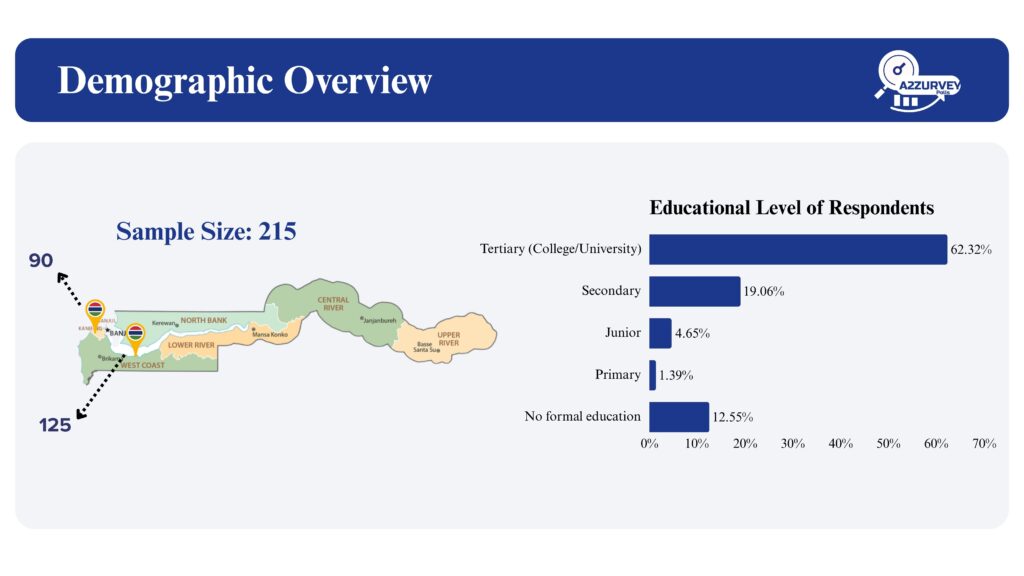
Out of the total 215 participants, the majority (58.13%) reside in the West Coast Region, while 41.86% are from the Greater Banjul Area.
In terms of education, the largest proportion of respondents (62.32%) reported having attained tertiary education, including college, university, or vocational training. Approximately 19.06% completed senior secondary school, while smaller proportions indicated junior secondary education (4.65%) and primary education (1.39%). Notably, 12.55% of respondents reported having no formal education. The relatively high share of respondents with tertiary education suggests that the findings of this survey primarily reflect the views of a well-educated population.
However, the inclusion of individuals with little or no formal education ensures that the survey also captures the perspectives of more vulnerable or marginalized groups, thereby offering a more comprehensive understanding of the socioeconomic impact of the bread price increase.
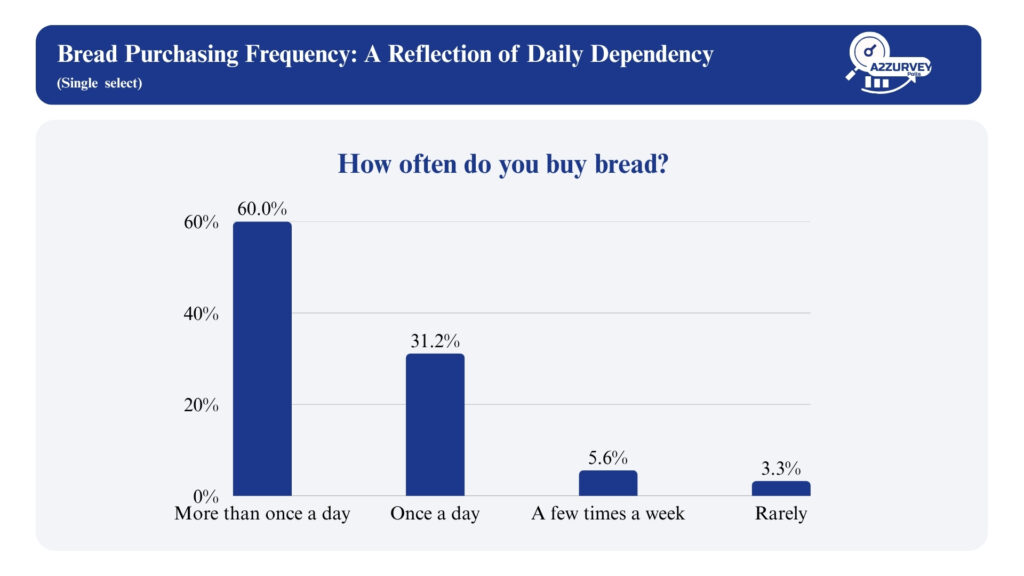
Bread Purchasing Frequency: A Reflection of Daily Dependency
Survey results indicate that bread purchasing is a frequent and essential activity for most households. About 60% of respondents reported buying bread more than once a day, while 31.16% purchase it once a day. A smaller proportion indicated lower frequencies, with 5.58% buying bread a few times a week, 2.33% a few times a month, and less than 1% purchasing it only once a month or rarely.
These findings highlight the central role of bread in the Gambian diet, particularly in urban settings. With approximately 91% of respondents purchasing bread at least once daily, it is evident that bread is not only a staple food but also a critical component of daily consumption patterns. This high level of dependency highlights the importance of bread’s affordability, weight, and availability for household food security.
The minimal proportion of low-frequency buyers may reflect individuals facing dietary restrictions, financial challenges, or those who rely on alternative staple foods. Nonetheless, given the widespread reliance on bread, any fluctuations in its price, size, or quality are likely to have an immediate and direct impact on household spending, nutrition, and food access.
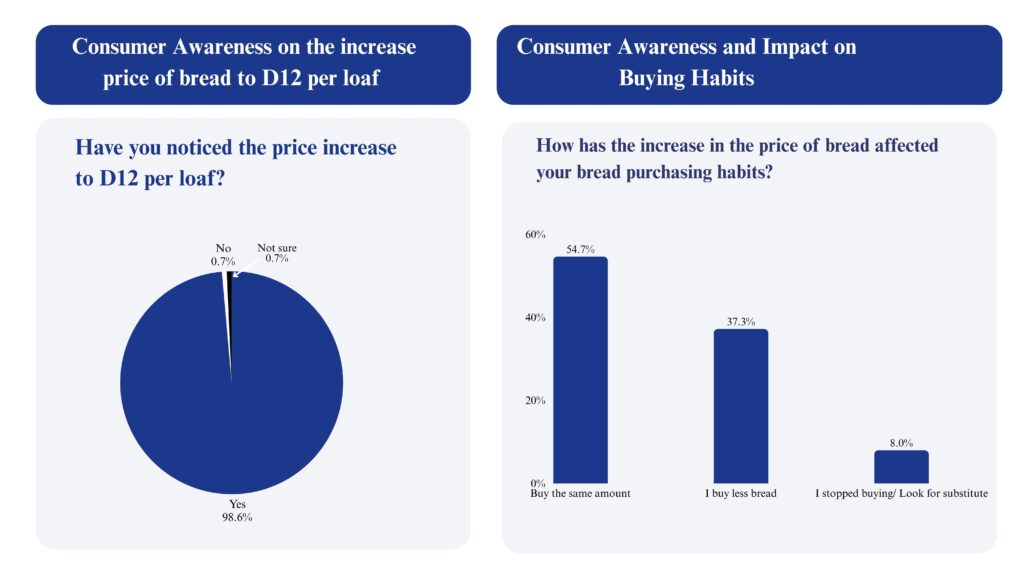
Public Awareness and Behavioral Response to the Price Increase
The survey results reveal that an overwhelming majority of respondents (98.6%) were aware of the recent increase in bread prices to D12 per loaf, indicating widespread public recognition of the change. This high level of awareness is an important first step in understanding how price shifts are perceived and internalized by consumers.
Among those who acknowledged the price increased, their purchasing responses reflected varying degrees of adjustment. More than half (54.72%) reported that they continue to buy the same amount of bread despite the higher cost. This suggests that for many households, bread remains a non-negotiable staple, likely due to its central role in daily meals and the limited availability of substitutes, or affordable substitutes.
However, a significant proportion (37.26%) indicated that they now purchase less bread than before. This reduction points to growing cost-consciousness among consumers and signals economic strain, particularly among low- and middle-income households that are attempting to manage rising expenses within already tight budgets.
Additionally, 8.02% of respondents reported either discontinuing bread purchases altogether or switching to substitutes. Although this group represents a smaller share of the sample, it demonstrates the extent to which sustained price increases can alter consumption behavior, even leading consumers to abandon staple food items when they become unaffordable.
Overall, these findings highlight that while the majority of consumers continue to manage the price increase without reducing their bread consumption, a considerable segment of the population is being forced to adjust, either by reducing the quantity purchased or by turning to alternatives. These behavioral shifts highlight the socioeconomic impact of rising bread prices and the varying levels of resilience and adaptability among Gambian consumers.
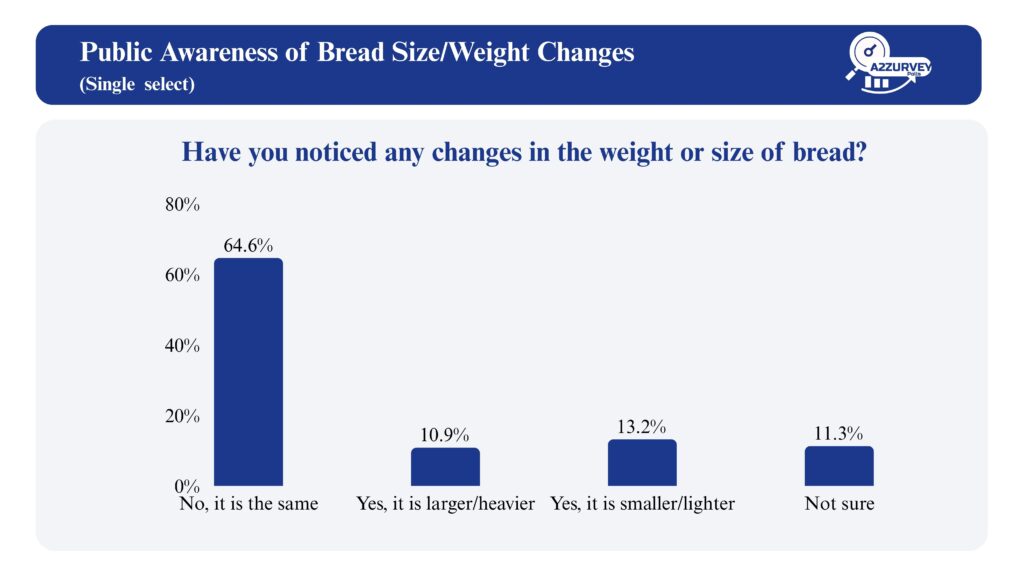
Public Awareness of Bread Size/Weight Changes
Among the respondents who acknowledged the increase in the price of bread (from D10 to D12), approximately 64.62% indicated that they had not observed any change in the weight or size of the breads. However, a significant number (13.21%) reported that the bread appeared smaller or lighter in weight compared to before the price increase. In contrast, about 10.85% noted an increase in the size or weight of the bread following the price increase. However, a small portion (11.32%) were unsure about. These observations highlight a growing perception among consumers that price increases may not necessarily be accompanied by improvements in product quality or quantity.
Expected Impact on Bread Price on Household Budget
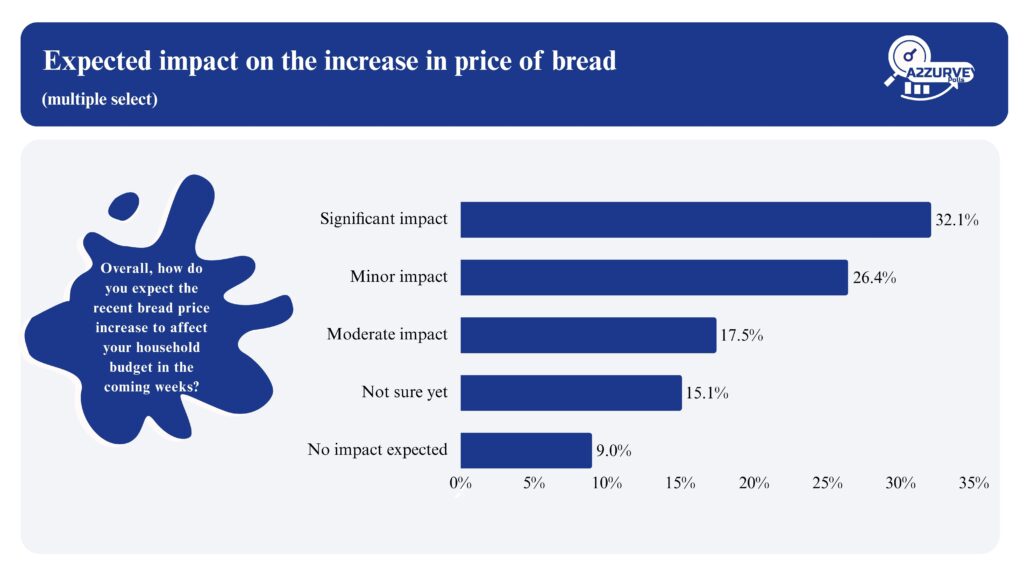
The data reveals a clear concern among respondents about the financial consequences of the recent bread price increase on their household budgets. A significant portion of participants (32.08%) anticipate that the price hike will have a major impact on their household spending in the coming weeks. This high figure underscores the financial sensitivity of many families in The Gambia, where even small increases in staple food prices can strain already limited incomes.
Following this, 26.42% of respondents expect the increase to have a minor impact, while 17.45% foresee a moderate impact. These combined responses indicate that for the majority of households, the price change is not being taken lightly and is expected to influence their budgeting decisions to some extent, whether in terms of cutting down on other expenses or adjusting food purchasing habits.
Meanwhile, 15.09% of respondents reported they are not sure yet how the increase will affect them. This uncertainty may reflect the adaptive nature of budgeting in lower-income settings, where households often adjust week-by-week based on cash flow. Lastly, only 8.96% of participants believe the bread price increase will have no impact at all, suggesting that bread is an essential commodity whose price fluctuations are difficult to absorb without consequence for most families.
Overall, the responses reflect how crucial bread is in household consumption patterns and how its affordability is directly linked to broader issues of food security and economic resilience.
Perceptions on Bread Price Increase
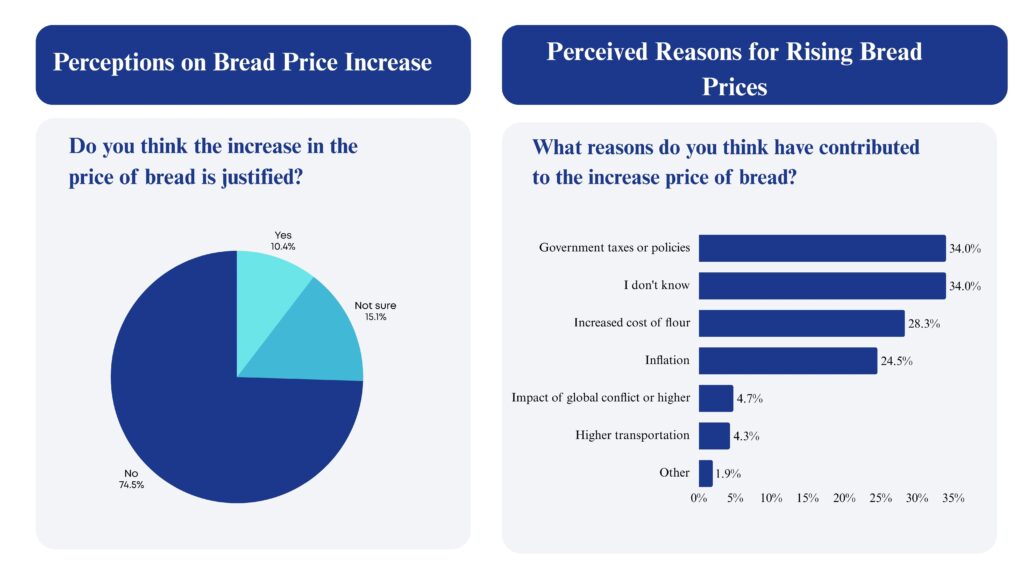
Survey findings reveal that a large majority of respondents (74.5%) believe the recent increase in bread prices is not justified, while only 10.4% consider it justified and 15.1% remain unsure. The overwhelming disagreement highlights the widespread public frustration and skepticism regarding the rationale behind the price change. Importantly, this sentiment was found to be consistent across all levels of education.
To further explore these perceptions, respondents who noticed the price increase were asked to identify what they believe contributed to the rise. Two dominant opinions emerged: government taxes and policies (33.96%) and uncertainty about the cause (33.96%). The rising cost of flour was cited by 28.30% of respondents, followed by general inflation (24.53%), global conflict (4.72%), and higher transportation costs (4.25%). A smaller proportion (1.89%) selected “other,” which constituted greed among bakers, foreign dominance in the baking sector, and ineffective government oversight.
The findings highlight not only a gap in public understanding of the economic mechanisms behind price fluctuations but also a lack of trust in both the market and the authorities. This combination of skepticism and limited transparency contributes to growing public dissatisfaction and a sense of vulnerability among consumers.
Download the full report here: CLICK HERE