Download the full RECAP report: CLICK HERE
In 2025, A2ZURVEY advanced its mission to deliver clear, credible, and locally grounded evidence to support better decisions across The Gambia. Over the year, we conducted nationwide and sector-specific studies spanning telecoms, mobile money, consumer goods, public trust, and cost-of-living dynamics.
With more than 2.4 million data points collected, 2025 marked a defining year in translating lived realities into actionable insight. Our work revealed a society under sustained economic pressure, a market shaped by extreme price sensitivity, and institutions facing a growing trust deficit, while digital adoption continues to redefine how Gambians communicate, transact, and cope.
Below is a snapshot of some of the public reports and case studies that shaped national conversations in 2025. These highlights represent only a portion of our work; many additional insights were delivered through commissioned client engagements.
Understanding Daily Survival Pressures
National Risk & Public Trust Survey: The State of the Nation
In 2025, A2ZURVEY conducted a nationwide public perception survey examining how Gambians assess risks facing the country. The findings point to a convergence of crises rather than isolated challenges.
Healthcare access and the cost of living emerged as near-universal concerns, with anxiety levels reaching saturation. Citizens no longer experience these as policy issues but as daily survival threats. Economic hardship, unemployment, corruption, and insecurity reinforce one another, producing a climate of persistent public anxiety and eroding institutional legitimacy.
The data shows a digitally connected but economically constrained youth population driving much of this sentiment. Trust in government capacity to address these challenges remains critically low, signaling a legitimacy gap that must be addressed before long-term reforms can succeed.
Telecoms, Data Affordability, and the Digital Experience
Telecom Market Analysis: Pricing, Power, and the User Experience Gap
A2ZURVEY’s telecom study uncovered a market defined by price-first decision-making and a rapidly growing mobile-first population. Data affordability now sits at the center of access, usage, and consumer loyalty.
Comium emerged as the dominant provider by capturing price-sensitive users through aggressive affordability positioning. Africell and Qcell continue to compete on perceived reliability and performance, while the state-owned Gamcel has nearly disappeared from public usage.
Despite high dependence on mobile connectivity, users report widespread dissatisfaction. Complaints around rapid data depletion, slow speeds, and lack of pricing transparency reveal a deep “user experience gap.” The future competitiveness of the sector hinges not only on network quality but also on restoring trust through transparency and fair value.
Mobile Money and Market Concentration
The Mobile Money Ecosystem: A Winner-Take-All Market
Our 2025 mobile money survey shows a hyper-concentrated ecosystem dominated by a single provider. Mobile money is no longer optional infrastructure—it is central to daily liquidity management for most Gambians.
Usage is driven by necessity rather than preference. Sending and receiving money remains the primary use case, supported by ease of use, low transaction costs, and dense agent networks. These factors have created high switching costs and formidable barriers to entry for competitors.
While overall trust levels are relatively strong, a persistent minority expresses fear of fraud and technical vulnerability. This trust gap represents both a systemic risk and a potential entry point for innovation, regulation, and consumer protection.
Cost of Living Case Studies
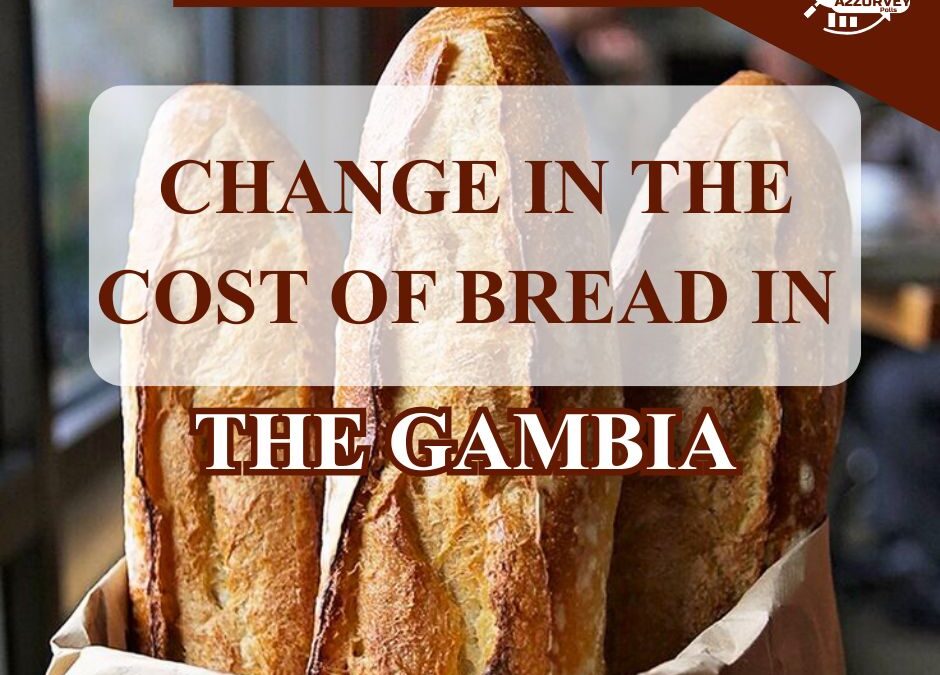
The Cost of Bread: Breadline Economics
Bread, a core non-discretionary good, became a powerful lens for understanding inflation’s impact on household resilience. A2ZURVEY’s case study on the price increase from D10 to D12 revealed near-universal awareness but overwhelming rejection of the hike’s justification.
For low-income households, even modest price increases force painful trade-offs. The data shows a regressive erosion of purchasing power, where families reallocate already-limited budgets to maintain access to basic food, often at the expense of healthcare, education, or transport.
This case highlights how inflation in essential goods accelerates food insecurity, fuels institutional mistrust, and deepens perceptions that economic systems are failing ordinary citizens.
Markets, Consumers, and Institutions
Across all studies, a consistent pattern emerges: high usage does not equal satisfaction. Markets are becoming more concentrated, digital adoption is accelerating, and consumers are adapting rapidly—but trust, affordability, and accountability remain fragile.
From telecoms and mobile money to public services and consumer staples, Gambians are highly engaged yet increasingly skeptical. Understanding not just what people use, but why they stay, switch, or disengage, remains central to effective strategy for businesses, policymakers, and development partners.
Looking Ahead
As we move into 2026, A2ZURVEY will continue to deepen its role as a trusted intelligence partner in The Gambia and beyond. Our focus is on strengthening data systems, expanding sector coverage, and translating complex realities into decision-ready insight.
In environments shaped by economic pressure, rapid digital change, and institutional strain, evidence is no longer optional; it is essential. We remain committed to replacing assumptions with facts and to supporting decisions that are grounded in the lived realities of people, markets, and institutions.
Download the full RECAP report: CLICK HERE