Download the full report here: CLICK ME
Introduction
This is a quick exploratory research conducted to understand public views on major challenges affecting Gambians. In the wake of rising economic pressures, insecurity, and public discontent, A2Zurvey conducted a survey in 2025 to capture Gambians’ perceptions of national risk. This research, carried out across four regions of the country, mainly focusing on the West Coast and Greater Banjul Area, sought to understand how citizens view the most pressing challenges affecting their lives and the nation’s future.
The study focused on national risks such as healthcare, cost of living, and drug abuse, as well as broader governance issues including corruption, transparency, and institutional trust. By gathering the views of Gambians, the report provides timely insights into how the public perceives both the severity of these risks and the effectiveness of government strategies in addressing these issues. This report serves as a benchmark for understanding public sentiment on national challenges and highlights the areas where citizens are most urgently calling for reform.
At a Glance
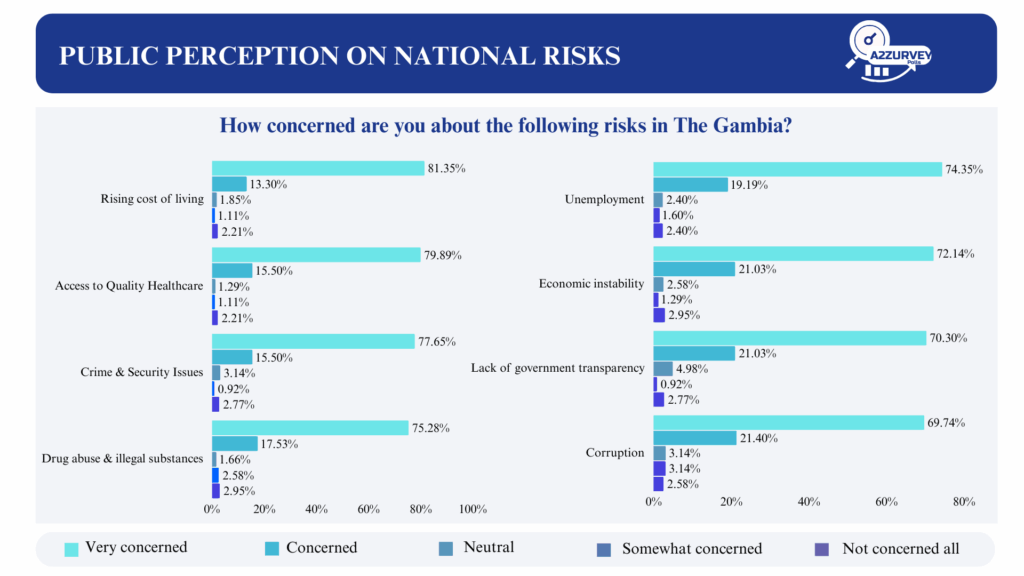
- Healthcare is the top national concern, with 95.39% of the respondents worried about access and quality of services.
- The rising cost of living is close behind, cited by 94.65% as a major national risk affecting households.
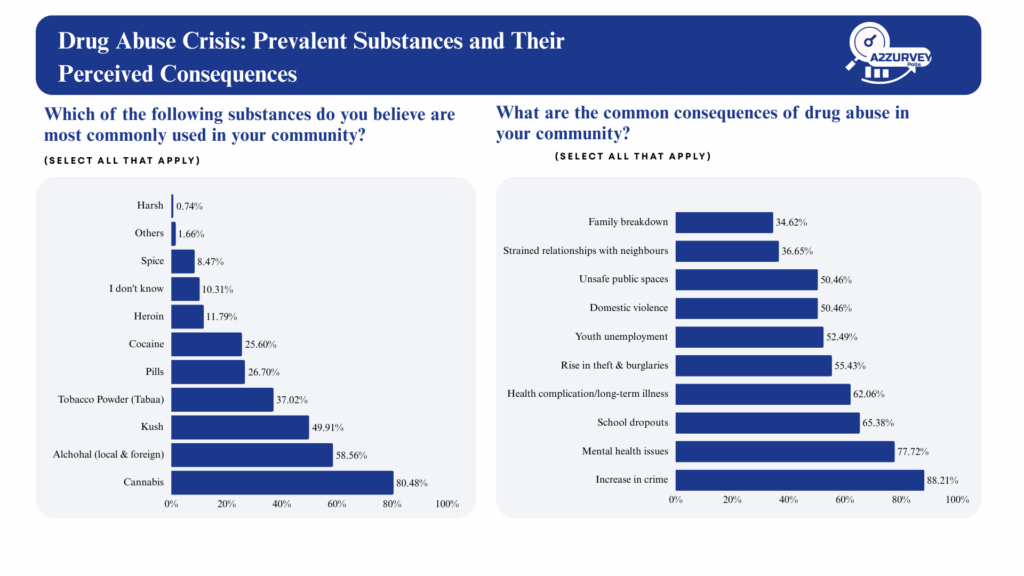
- Drug abuse is viewed as a growing crisis, with 92.81% linking it to crime, mental health issues, and school dropouts.
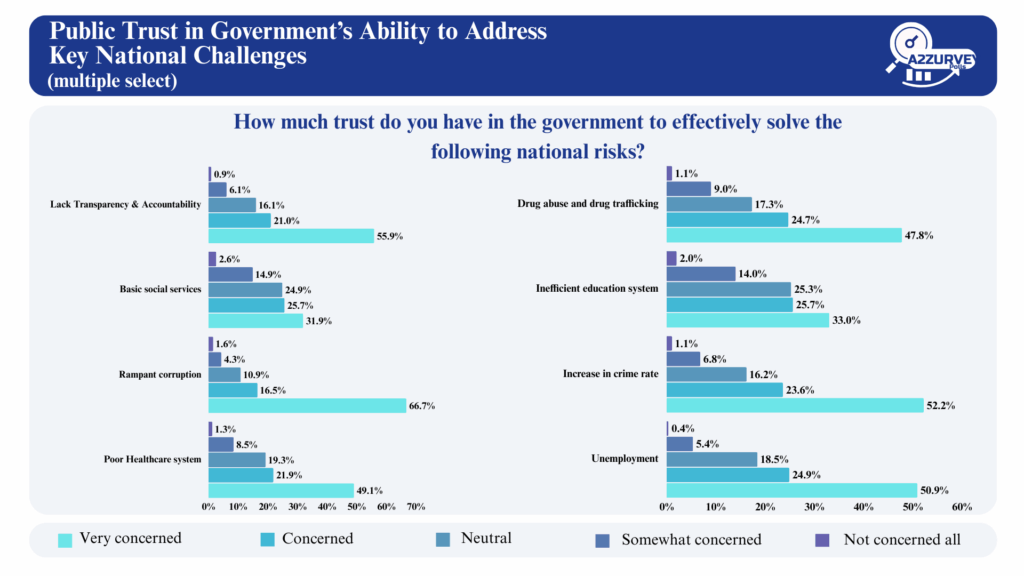
- Trust in government is collapsing, as two-thirds (67.74%) report no trust in anti-corruption efforts and only 4.6% fully trust government institutions.
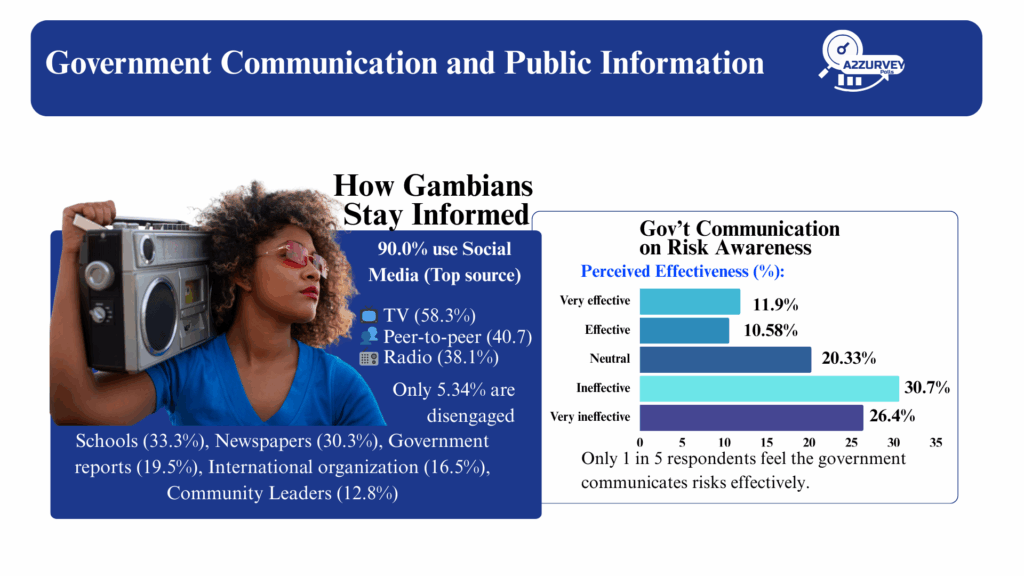
- Social media dominates public information, with 90% relying on platforms like WhatsApp and Facebook, while 57.19% rate government communication as ineffective.
Demographic Overview
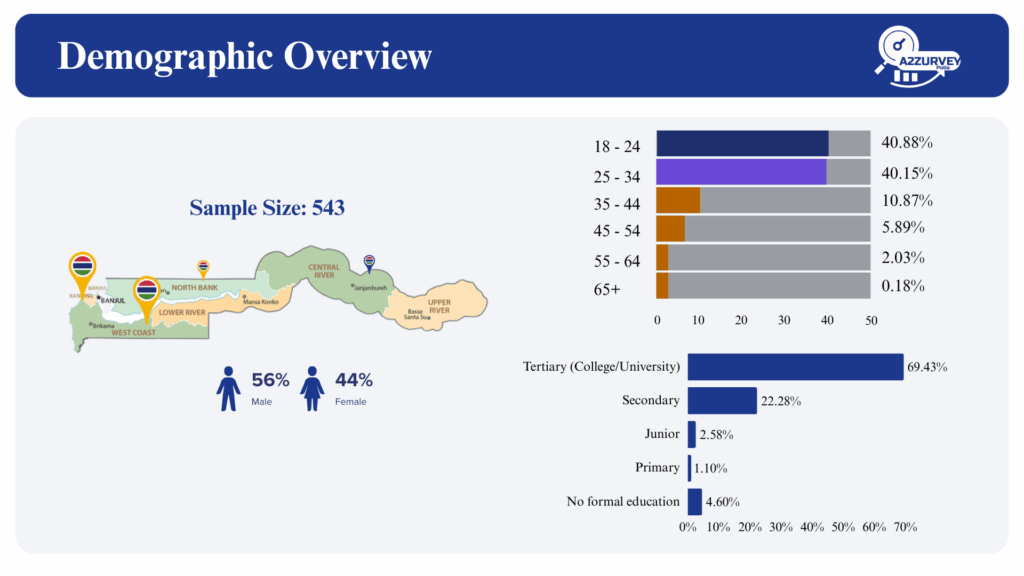
The study was based on responses from 543 Gambians (exploratory); the majority of whom are from the Greater Banjul and West Coast regions. A youthful majority defined the survey sample, with 81% aged between 18 and 34 years old, 56% male and 44% female, and 69% had attained tertiary education, while 22% had completed secondary school. This demographic profile shows that the voices driving risk perception in The Gambia are predominantly young and educated, reflecting both the struggles and expectations of the next generation.
Key Findings
1. Healthcare, Cost of Living, Crime, Corruption, and Transparency
The respondents place their everyday survival and security at the center of national risks. Healthcare access (95.3%) was identified as the top issue, highlighting growing frustration with poor-quality services and high costs. The rising cost of living (94.6%) followed closely, with households struggling against inflation and limited income opportunities. Crime and insecurity (93.1%) further add to people’s fears, while corruption (91.1%) and lack of transparency (91.3%) deepen distrust in institutions. These challenges are viewed as interconnected, with governance failures seen as both causes and consequences of the crises facing ordinary citizens.
2. Drug Abuse Crisis
The report identifies drug abuse as one of the fastest-growing national risks, with 92% of respondents naming it a serious concern. Cannabis, Kush, and alcohol dominate usage, while hotspots include ghettos, bars, homes, and even schools. Respondents link drug abuse to some of the country’s most urgent social challenges: crime (88%), mental health issues (78%), school dropouts (65%), and serious illness (62%). For many, the rise in drug abuse is both a symptom of unemployment and poverty and a driver of deeper insecurity and community breakdown.
3. Trust in Government
Confidence in the government is alarmingly weak. 66.7% of respondents said they have no trust at all in anti-corruption efforts, while 55.9% reported no trust in transparency and accountability measures. Half of the respondents also expressed no trust in government responses to unemployment and crime. Public institutions fared little better, with seven in ten saying Parliament is ineffective and nearly two-thirds rating the Judiciary as ineffective. Only 4.6% of respondents said they fully trust government institutions, signaling a profound crisis of legitimacy
4. Government Communication and Public Information
The study also points to a significant gap between government communication and public information needs. 57% of respondents rated government communication on risks as ineffective or very ineffective, while only 22% found it effective. In this vacuum, Gambians rely heavily on other channels: 90% turn to social media, 58% to television, 41% to peer-to-peer conversations, and 38% to radio. Social media, particularly WhatsApp and Facebook, has become the dominant space for information, debate, and rumor. This shift highlights both the energy of youth-driven platforms and the risks of unchecked misinformation.
5. Urgent Areas for Reform
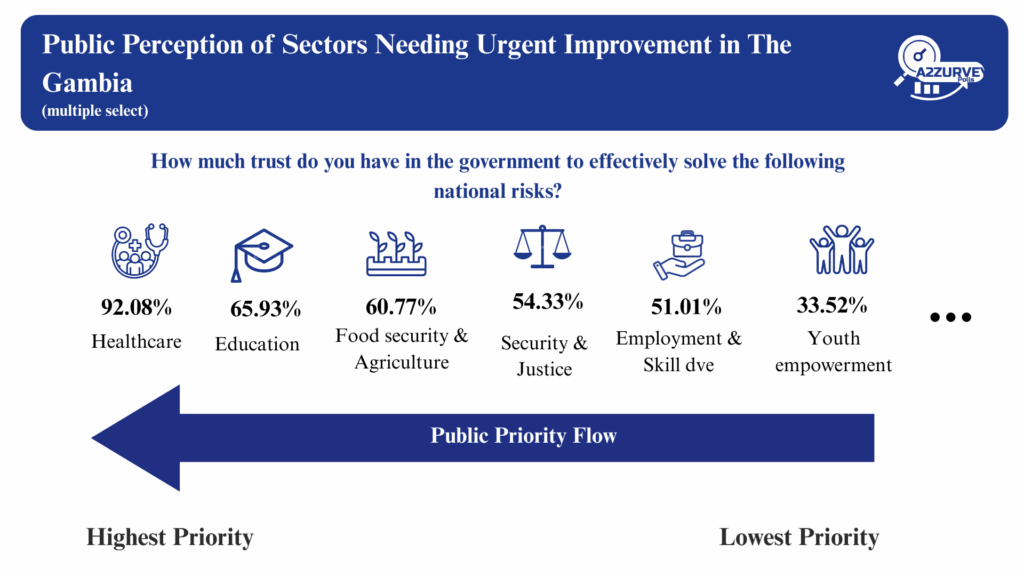
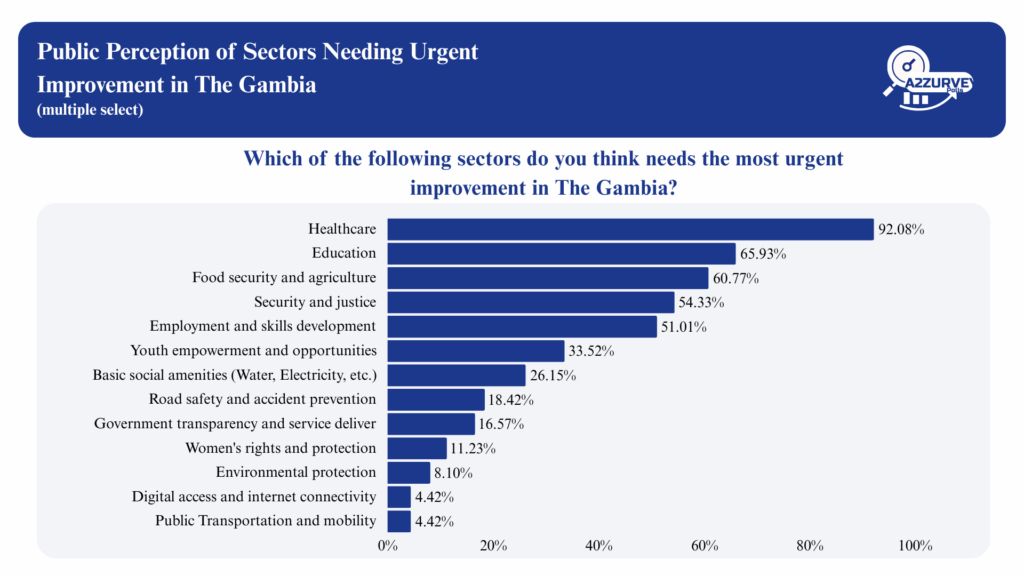
When asked which sectors need immediate reform, respondents overwhelmingly identified healthcare (92.08%) as the top priority. Education (65.93%) followed closely, reflecting concerns about school quality and high dropout rates. Food security and agriculture (60.77%) were also highlighted, linked to rising food prices and dependency on imports. In addition, security and justice (54.33%) and employment and skills development (51.01%) were identified as crucial for building safety, accountability, and opportunities for a youthful population. These results outline a roadmap for reforms that citizens expect leaders to prioritize.
Conclusion
The 2025 Public Perception of National Risk survey reveals a society under pressure but also highly aware of what must change. Gambians are struggling with healthcare, high living costs, insecurity, and corruption, while drug abuse is emerging as a community-level crisis. Trust in government and institutions has collapsed to critically low levels, leaving social media as the main channel for national conversation. Yet, amid this disillusionment, Gambians are clear about the path forward: urgent reforms in healthcare, education, food security, security and justice, and employment. The message is unmistakable: the people are demanding action, and the time for responsive, transparent governance is now.
Download the full report here: CLICK ME